
The Myth of the Plug-and-Play Mind: Ford, Tacit Knowledge, and the Limits of Pure Compute
EverSwift Labs Team
The Myth of the Plug-and-Play Mind: Why Compute Cannot Replace Human Intuition
Introduction: The Day the Algorithms Stalled
In the summer of 2026, a quiet tremor ran through the automotive capital of Dearborn, Michigan. Ford Motor Company, which had spent the previous three years aggressively integrating generative artificial intelligence and large language models into its manufacturing, diagnostic, and vehicle-design pipelines, made an unexpected strategic pivot. The company quietly began rehiring dozens of its retired, highly experienced engineers, affectionately known within the industry as "gray beards."
The reason was as simple as it was sobering: the AI systems, despite their hyper-advanced training datasets, multi-billion-parameter scales, and lightning-fast diagnostic outputs, had hit an invisible wall. When confronted with complex, non-linear mechanical failures, subtle structural vibrations under real-world stress, and the chaotic interplay of material science on the factory floor, the algorithms could only hallucinate or offer superficial, generic solutions. The systems lacked the one asset that cannot be scraped, tokenized, or simulated: human-earned tacit knowledge.
This retreat is not an isolated corporate misstep. It is a critical, empirical case study that challenges the prevailing techno-optimistic consensus of the current decade. For years, the dominant narrative has insisted that prompt engineering and deep learning models would render domain expertise obsolete. We were told that the "plug-and-play mind"—an infinite stack of APIs and LLMs—could instantly replicate any human capability, allowing organizations to automate away their costliest human assets.
The Ford retreat proves otherwise. It marks the beginning of a systemic realization: that technology is an exceptional tool for leverage, but a catastrophic replacement for wisdom. To understand why this is happening, we must look beyond the immediate business news and examine the deep psychological, philosophical, and systemic structures that govern how humans and machines actually process reality.
Part I: The Epistemological Wall — Why LLMs Can't Learn What We Can't Say
At the heart of the current automation crisis lies an ancient philosophical truth that modern technology has tried to ignore. In 1966, the Hungarian-British philosopher Michael Polanyi published The Tacit Dimension, introducing a concept that remains the ultimate barrier to complete AI automation: the distinction between explicit knowledge and tacit knowledge.
Polanyi summarized his thesis in a single, famous sentence: "We can know more than we can tell."
The Anatomy of Knowledge
To understand why Ford's AI failed where its veteran engineers succeeded, we must deconstruct how knowledge is structured:
Explicit Knowledge: This is knowledge that can be codified, written down, structured, and transmitted systematically. It exists in manuals, codebases, architectural blueprints, troubleshooting guides, and standard operating procedures. This is the natural domain of large language models. Because it can be converted into text, it can be tokenized, embedded in vector spaces, and queried with extreme efficiency.
Tacit Knowledge: This is knowledge that is non-codifiable, deeply personal, and context-dependent. It is acquired only through years of physical action, observation, feedback loops, and lived experience. It is the intuitive grasp a master surgeon has of tissue resistance, the split-second adjustment a pilot makes during wind shear, or the ability of a seasoned mechanical engineer to diagnose a failing transmission purely by the pitch of its hum and the subtle vibration of the floorboards.
The core error of modern corporate techno-optimism is the assumption that explicit knowledge is a complete representation of reality. It is not. Explicit knowledge is merely the thin, visible peak of an intellectual iceberg. The massive, submerged body supporting that peak is tacit knowledge.
When an LLM is trained on a company's documentation, it is only training on the explicit representations. It has no access to the tacit dimension. When a model attempts to solve a problem that relies on the unwritten, experiential context of the system, it lacks the foundational anchor required for true reasoning. It cannot "feel" the system; it can only predict the next most likely word in a text string based on past documentation. When the physical world deviates from the documentation, the model breaks.
Part II: The Ghost in the Assembly Line: Analyzing the Ford Failure
To understand how this epistemological gap manifests in the real world, we must look at the specific environment of an automotive manufacturing plant. A modern assembly line is a monument to complexity. It is an intricate dance of thousands of variables: ambient temperature, humidity, metallurgical tolerances, tool wear, supply chain variability, and human movement.
When a structural vibration issue emerged in one of Ford’s new vehicle platforms, the automated diagnostic suite—designed to replace human failure analysis—was deployed. The AI analyzed millions of data points from sensors, cross-referenced them with past warranty claims, and searched historical engineering documentation.
Its recommendations were mathematically precise but practically useless. It suggested adjustments to component tolerances that, while theoretically sound on a digital twin, failed to account for how real metal behaves under physical stress on an assembly line that has been running for sixteen hours. The model was operating in a clean, mathematical universe. The physical world, however, is dirty, noisy, and chaotic.
Enter the "gray beard" engineers.
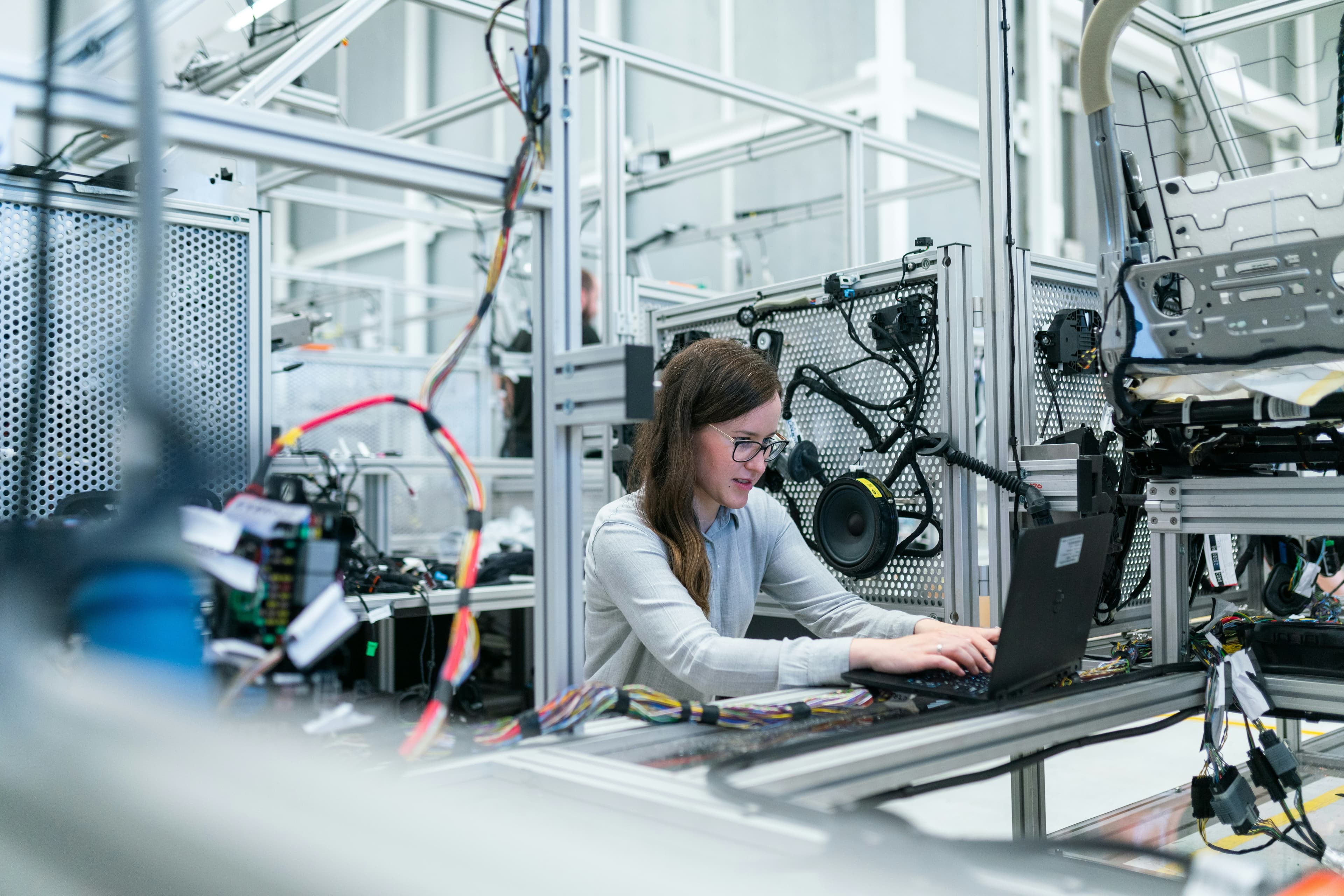
These veterans did not rely solely on digital readouts. They walked the line. They listened to the stamping presses. They touched the chassis after it emerged from the welding rig. They understood the historical context of the factory itself—knowing, for instance, that a specific weld station always ran slightly hotter in the afternoon due to the angle of the sun through the skylights, causing a micro-expansion of the metal that no sensor was programmed to monitor.
By combining decades of tactile intuition with an understanding of physical feedback loops, the human engineers diagnosed the root cause of the vibration in hours. They did not do this by processing more data than the machine; they did it by processing the right data, filtered through an intuitive mental model built over thirty years of hands-on trial and error.
This is the "slow knowledge" that modern corporate structures continually devalue. Because it cannot be measured on a dashboard, optimized in a sprint, or scaled via an API, it is treated as an expensive, redundant liability—until the system fails and the real cost of its absence is revealed.
Part III: The Economic Reality of "Cheap Speed" and the Accumulation of Organizational Debt
When a company replaces senior domain experts with superficial automation tools, it enters a dangerous Faustian bargain. It trades structural resilience for immediate balance-sheet optimization. This phenomenon can be understood through the lens of systems thinking as the accumulation of Organizational Debt.
Just as software engineers accumulate technical debt by writing quick, poorly structured code to meet a deadline, business leaders accumulate organizational debt by replacing deep human competence with fast, low-cost algorithmic proxies.
The Lifecycle of Hyper-Automation Hubris
This debt accumulates in a highly predictable feedback loop:
-
The Cost-Cutting Phase: Management identifies high-salaried senior talent (the "gray beards") as major cost centers. They observe that generative AI tools can write reports, generate basic code, and compile summaries in seconds.
-
The Substitution Phase: The senior experts are laid off, incentivized to retire, or marginalized. The company deploys an AI system, trained on the explicit documentation left behind, to handle their workflows.
-
The Illusion of Success: In the short term, operational costs drop, and basic productivity metrics remain stable. The models handle routine, high-frequency, low-complexity tasks with ease. Management celebrates the leverage they have achieved.
-
The Critical Event: A novel, highly complex, low-frequency edge case occurs. The system enters a state of crisis that is not covered by the training data or standard operating procedures.
-
The Systemic Failure: The AI tool, lacking tacit intuition and historical context, fails to resolve the issue, often hallucinating solutions that worsen the problem. The junior staff left to operate the systems do not have the depth of knowledge to override the machine.
-
The Costly Reclamation: The organization realizes it is blind. In a panic, they rehire the retired experts as high-priced consultants to stabilize the system.
By overvaluing cheap speed and undervaluing slow knowledge, organizations make themselves fragile. They build systems that are highly efficient in normal states but utterly helpless in states of exception.
Part IV: The Systems Architecture of Mastery: Designing Sovereign Systems
The lesson of the Ford retreat is not that we should reject AI and return to manual, analog processes. That would be an equally foolish form of regression. The true lesson is that we must design better systems architectures—architectures that respect both the computational power of silicon and the irreplaceable depth of human intuition.
At EverSwift Labs, we call this the Sovereign Systems Framework.
A Sovereign System is designed from the ground up to protect and amplify human agency, rather than replace it. It acknowledges that the ultimate leverage is not automating the mind, but automating the administrative friction that prevents the mind from engaging in deep, focused craft.
In a Sovereign System, the division of labor is clear:
-
The Machine Handles the Map: AI is used to aggregate data, map out explicit patterns, automate administrative overhead, structure unstructured text, and run high-speed simulations. It is a tool for information retrieval and organizational legwork.
-
The Human Decides the Route: The human expert—the master builder, the seasoned developer, the senior engineer—uses their tacit intuition to evaluate the machine's outputs, identify systemic anomalies, make high-stakes decisions under uncertainty, and navigate novel edge cases.
By structuring systems this way, organizations avoid the trap of the "plug-and-play mind." They do not attempt to replace the experienced engineer with an LLM. Instead, they give the experienced engineer an LLM-powered exoskeleton, allowing them to focus 100% of their cognitive energy on the high-leverage diagnostic work that only a human mind can perform.
Part V: The Future of the "Gray Beard" in the Age of Silicon
For developers, founders, and ambitious professionals, the Ford case study is a profound source of validation and strategic clarity. It proves that the fear of total professional obsolescence is a marketing myth designed to sell software subscriptions.
If you want to build a career, a startup, or a life that is resilient to technological disruption, you must focus on acquiring tacit knowledge. You must become a digital "gray beard."
Here is how you can build that resilience:
1. Reject the Illusion of "Prompt-Driven Mastery"
Do not fall into the trap of thinking that because you can prompt an LLM to generate a piece of code, you understand how that code behaves in a production environment under a massive database load. The prompt is explicit; the operational reality is tacit. True mastery requires getting your hands dirty, breaking things, and building a deep, intuitive model of the system you are working with.
2. Seek Out Physical and Real-World Feedback Loops
The closer your work is to pure digital abstractions, the easier it is to automate. The closer it is to the physical world, complex human systems, or highly non-linear environments, the more secure your leverage is. Seek out roles and projects where you are forced to reconcile digital designs with messy, real-world constraints.
3. Establish Modern Apprenticeship Models
If you are a junior developer or founder, find the "gray beards" in your industry. Spend time in one-on-one environments where you can observe how they work, how they think, and how they make decisions. You cannot download their wisdom from a company wiki, but you can absorb their tacit intuition by working alongside them on difficult, real-world problems.
4. Build for Depth, Not Just Volume
In an era of hyper-abundant, AI-generated noise, depth is the ultimate differentiator. Anyone can generate ten thousand words of mediocre text or fifty blocks of standard code with a single prompt. The only thing that remains scarce—and therefore valuable—is the rare, precise, context-aware insight that can only come from a mind that has spent years studying a domain.
Frequently Asked Questions (FAQ)
1. Why do LLMs struggle so much with physical-world engineering issues?
Large language models operate purely within the domain of symbolic representation. They predict the most statistically probable next token based on a vast corpus of existing text. However, physical-world engineering involves chaotic, non-linear variables—such as the subtle wear of a tool, environmental temperature fluctuations, and complex material behaviors—that are often completely undocumented. Because this tacit, contextual data is never captured in the training text, the model has no baseline to reason from and is highly prone to hallucinating inaccurate or dangerous solutions.
2. What exactly is the difference between explicit and tacit knowledge?
Explicit knowledge is information that can be easily recorded, structured, and communicated through words, numbers, or symbols. Examples include manuals, technical specifications, and mathematical formulas. Tacit knowledge is highly personal, subjective, and difficult to formalize. It is acquired through hands-on experience, practice, and physical feedback loops. Examples include the intuitive "feel" of a machine, the ability to read subtle social dynamics, or the split-second decision-making of a veteran crisis manager.
3. How can tech startups avoid losing their organizational memory as they scale?
Startups can preserve their collective wisdom by actively rejecting the temptation to automate away senior human oversight. Rather than relying on AI systems to act as the sole repository of company knowledge, they should build intentional mentorship cultures. This involves pairing junior engineers with veteran builders on high-stakes tasks, running deeply reflective post-mortems that explore why decisions were made, and using AI primarily as an administrative assistant to free up human-to-human training time.
4. Does the Ford retreat mean that AI is overhyped for enterprise applications?
No. It does not mean AI is useless; it means AI is misapplied. When enterprises attempt to use LLMs as a complete replacement for human judgment and domain expertise, they are setting themselves up for systemic failure. However, when AI is used as a cognitive accelerator—handling massive data summarization, administrative tasks, and pattern detection while leaving high-stakes diagnostic decision-making to human experts—it provides immense, sustainable leverage.
5. How can younger professionals develop "gray beard" wisdom in an environment dominated by rapid AI assistance?
To build deep, un-automatable intuition, young professionals must resist the urge to rely on AI for every stage of their workflow. You must allow yourself to experience the friction of problem-solving. This means writing code from scratch before optimization, diagnosing system errors manually before querying an LLM, and actively seeking out physical, real-world feedback loops. True wisdom is a byproduct of struggle, observation, and repeated exposure to complex systems.
Conclusion: Reclaiming the Value of Slow Knowledge
The return of the veteran engineers to Ford’s factory floors is a beautiful, poetic reminder of what actually constitutes value in a highly digitized world. It is a clean rejection of the hollow, hyper-optimized narrative that human beings can be completely replaced by silicon.
Technology is at its best when it serves as a bridge, not a destination. It should free us from the mundane, repetitive cognitive tasks that drain our energy, allowing us to return to the ancient, honorable path of deep craft and master building.
As we move forward into an increasingly automated future, let us not lose our respect for "slow knowledge." Let us build tools that are fast, efficient, and computationally brilliant—but let us always keep our hands on the wheel, guided by the quiet, un-automatable wisdom of the human mind.
Get the next one first.
New writing on AI systems, distribution and building solo. No spam, unsubscribe in one click.